

Blog
How Long Should You Wait Between Skincare Layers?

A Practical Guide to Absorption, Pilling, and Better Product Application
Many skincare routines include several steps: toner, serum, moisturizer, sunscreen, and sometimes targeted treatments. A common question is whether each layer needs time to “fully absorb” before the next product is applied.
In most cases, skincare does not require long waiting periods. The more important factors are texture, application amount, product compatibility, and how the skin feels between layers.
Understanding these small details can make a routine more comfortable, reduce pilling, and help products spread more evenly.
Does Skincare Need to Be Fully Absorbed?
Not necessarily.
Most skincare products are designed to remain partly on the surface of the skin. Moisturizers, sunscreens, and film-forming serums often create a thin layer rather than disappearing completely.
The goal is not to wait until the skin feels completely dry. Instead, apply the next step when the previous layer has settled enough that it no longer moves excessively across the skin.
A slightly damp or lightly tacky finish is usually acceptable.
A Simple Timing Guide
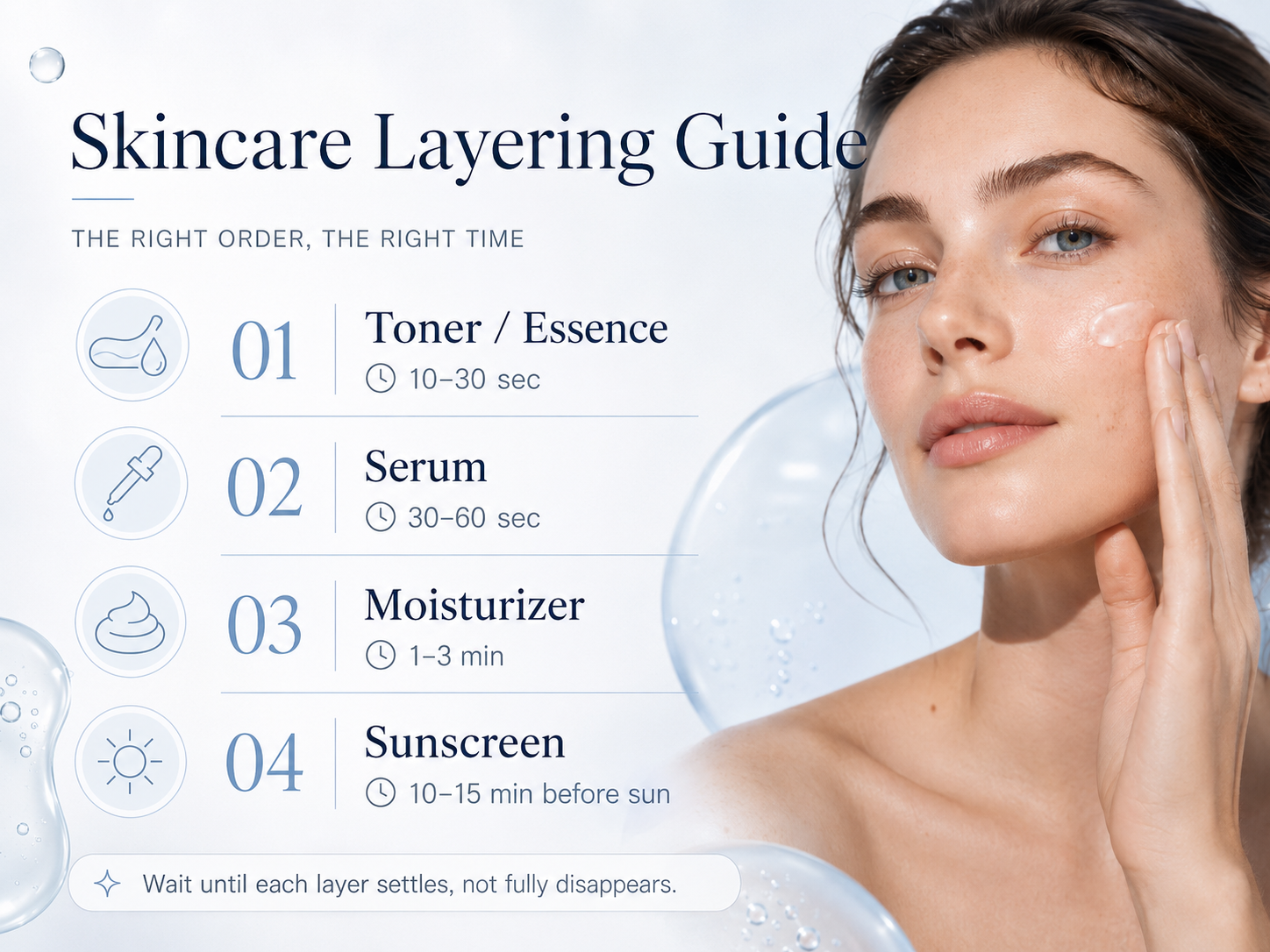
These times are general references rather than strict rules.
Toner or Essence
Wait approximately 10–30 seconds.
The skin can remain slightly damp before applying serum. Applying hydrating products to lightly damp skin may help them spread more easily.
Lightweight Serum
Wait approximately 30–60 seconds.
Proceed when the serum has spread evenly and no longer feels very wet or slippery.
Thick or Film-Forming Serum
Wait approximately 1–2 minutes.
Products containing higher levels of polymers, silicones, gums, or film-forming ingredients may need slightly more time to settle.
Moisturizer
Wait approximately 1–3 minutes before sunscreen or makeup.
The moisturizer does not need to disappear completely. It should simply stop moving noticeably when the skin is touched lightly.
Sunscreen
Allow approximately 10–15 minutes before prolonged sun exposure.
Before makeup, waiting 3–5 minutes may help the sunscreen form a more even layer and reduce movement during foundation application.
Why Products Sometimes Pill
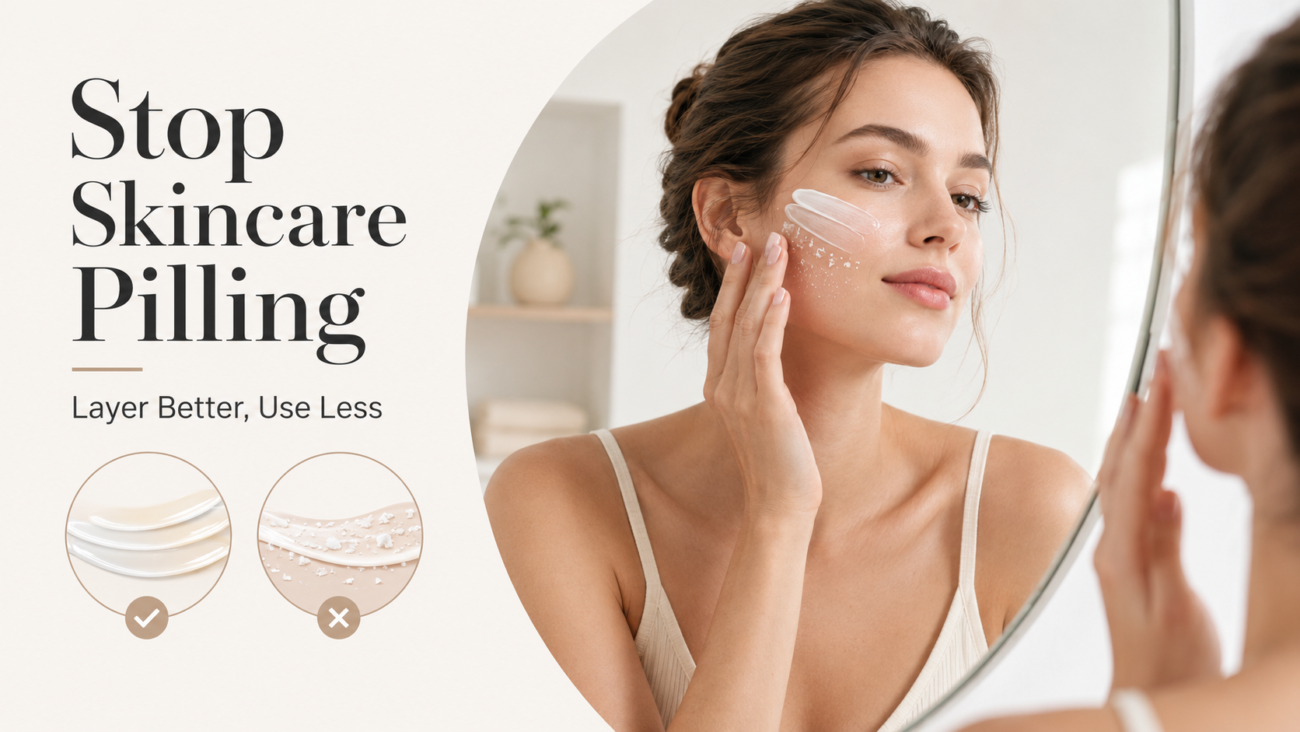
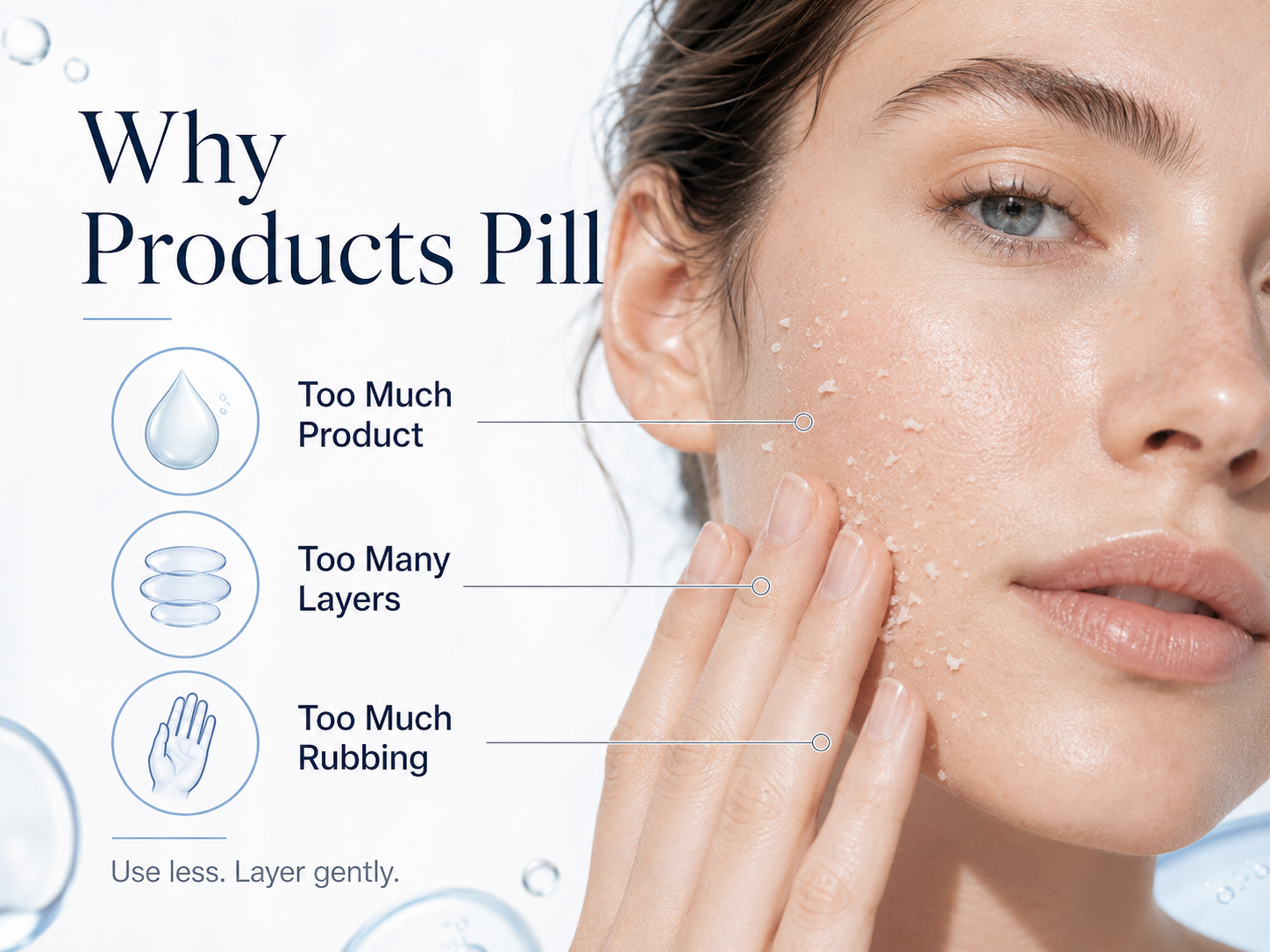
Pilling occurs when skincare rolls into small flakes or balls on the skin. This does not always mean the product is poor quality.
Several small application details may cause it.
Too Much Product
Applying thick layers creates excess material on the skin’s surface. When another product is added, the layers may roll together.
Using more product does not always improve results, except where a specific amount is required, such as sunscreen.
Too Many Film-Forming Layers
Some serums, primers, moisturizers, and sunscreens contain ingredients that create a flexible surface film. Layering several of these products can increase friction and pilling.
Rubbing for Too Long
Repeated circular rubbing can disturb layers that have already started to set.
After spreading the product evenly, use light pressing motions rather than continuing to massage aggressively.
Incompatible Textures
A very rich oil-based cream applied beneath a fast-setting, water-based film may not layer smoothly. The opposite combination can also create uneven movement.
Applying Makeup Too Soon
Foundation may drag across sunscreen or moisturizer that has not settled, causing patchiness or visible rolling.
Patting or Rubbing: Which Is Better?
Both can be appropriate, but each has a different purpose.
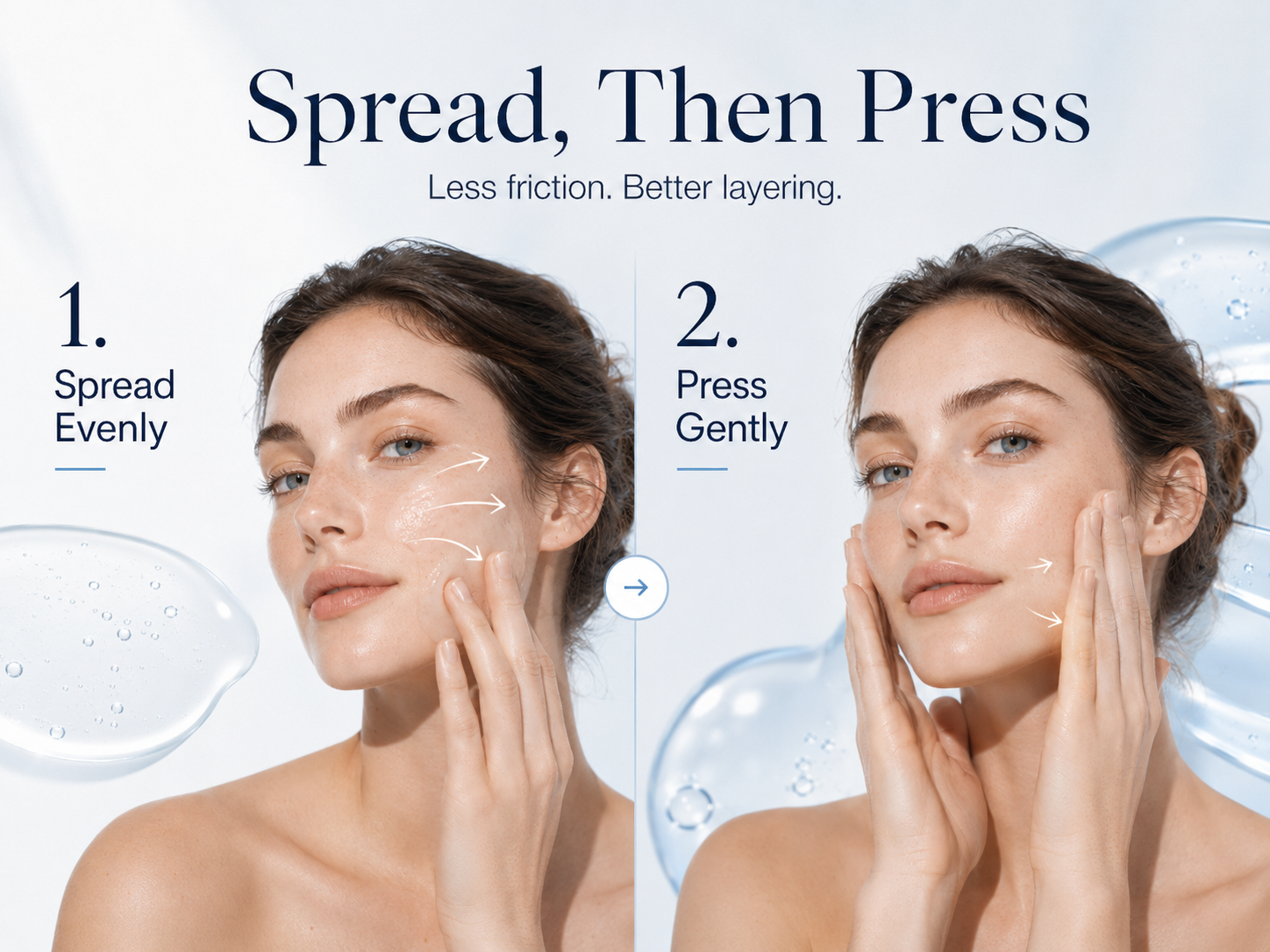
Use Gentle Spreading First
A product must first be distributed evenly across the skin. Light outward strokes are usually more effective than immediately pressing it into one small area.
Use Pressing Motions to Finish
Once the product is evenly spread, gentle pressing can reduce friction and help the layer settle.
Avoid Excessive Massage
Long or forceful massage does not necessarily increase absorption. It may instead cause redness, irritation, or pilling, especially when several products are layered.
The best technique is usually: spread briefly, then press lightly.
Should Skin Be Wet or Dry?
It depends on the product.
Hydrating Toners and Serums
These can usually be applied to slightly damp skin. This helps lightweight humectant formulas spread easily.
Moisturizers
Moisturizer can also be applied while the skin retains a small amount of moisture after cleansing.
Retinoids and Strong Exfoliating Products
These are often better applied to completely dry skin, especially for beginners or sensitive skin. Damp skin can increase penetration and may increase irritation.
Sunscreen
Sunscreen should generally be applied over skin that is no longer wet. Excess surface moisture may interfere with an even film.
The Importance of Product Amount
Correct layering depends as much on quantity as timing.
For the face, many concentrated serums only require a few drops. Thick creams often need less than expected, while sunscreen requires a more generous and even application.
Applying too much toner, serum, or cream may leave the skin sticky and make every later step more difficult.
A useful rule is to begin with a modest amount and add more only where necessary.
From Thin to Thick: Is This Rule Always Correct?
The “thin to thick” rule is useful, but it is not absolute.
In general:
- Water-like products
- Lightweight serums
- Creamier treatments
- Moisturizer
- Sunscreen during the day
However, prescription products, strong active ingredients, and products with specific instructions should follow their own directions.
The purpose of layering from thin to thick is mainly to improve spreadability and reduce interference between textures.
Why Skin May Feel Sticky
A sticky finish may be caused by:
- Applying too much product
- Layering several humectant-rich formulas
- High humidity
- Film-forming ingredients
- Not allowing enough time between thicker layers
- Using multiple products with similar textures
Stickiness does not automatically mean the product is ineffective or unsafe. However, if the routine remains uncomfortable, reducing the number of layers or the amount used may help.
When Waiting Longer Is Helpful
Longer waiting times may be useful when:
- A product remains visibly wet
- The previous layer moves when touched
- Makeup repeatedly becomes patchy
- Sunscreen pills over moisturizer
- Several film-forming products are used
- A strong treatment causes irritation when applied to damp skin
Waiting longer is not always the solution. Sometimes the better adjustment is using less product or simplifying the routine.
When Waiting Is Unnecessary
There is usually no need to wait several minutes between every basic hydrating step.
For example, toner, a lightweight serum, and moisturizer can often be applied within a short period as long as each layer is evenly distributed.
Excessively long waiting times can also allow the skin to become dry and tight, especially after cleansing.
A Practical Morning Routine
Step 1: Cleanse
Gently cleanse and pat away excess water. The skin does not need to be completely dry before hydrating products.
Step 2: Hydrating Toner or Serum
Apply a thin layer and wait until it is no longer dripping or overly wet.
Step 3: Moisturizer
Apply an even amount and allow it to settle for approximately 1–3 minutes.
Step 4: Sunscreen
Spread sunscreen evenly across exposed skin. Allow it to form an even layer before makeup or sun exposure.
A Practical Evening Routine
Step 1: Cleanse Thoroughly
Remove sunscreen, makeup, and daily buildup without over-cleansing.
Step 2: Treatment or Serum
Apply according to the product instructions. Strong active products may require completely dry skin.
Step 3: Moisturizer
Apply after the treatment has settled. Avoid prolonged rubbing.
Step 4: Optional Occlusive Layer
Very dry skin may benefit from a small amount of a richer product on selected areas rather than across the entire face.
Final Takeaway
There is no universal waiting time for every skincare product.
Most layers only need enough time to spread evenly and settle on the skin. Lightweight products may require a few seconds, while thicker or film-forming products may benefit from one or two minutes.
When pilling, stickiness, or uneven makeup occurs, waiting longer may help—but reducing product amount, limiting friction, and simplifying the routine are often more effective.
The best routine is not the one with the longest pauses. It is the one in which each layer remains comfortable, even, and compatible with the next.