

Blog
Understanding Five Common Skin Conditions

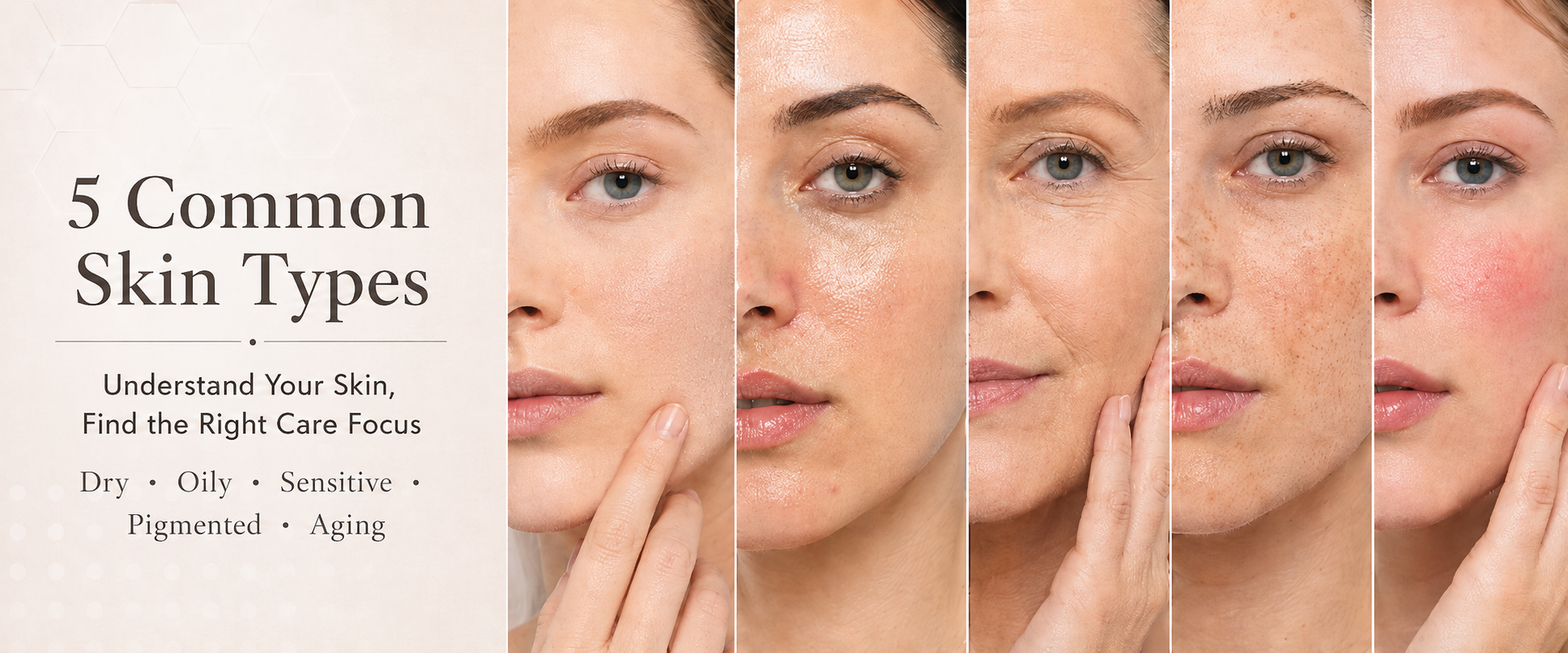
How to Recognize Dryness, Oiliness, Sensitivity, Pigmentation, and Visible Skin Aging
Skin does not always fit neatly into a single category. It may feel dry in winter, become oily in humid weather, or appear sensitive after over-cleansing. Pigmentation and visible aging can also occur alongside any basic skin type.
Understanding these differences helps you build a more appropriate daily routine without relying on harsh treatments or frequent product changes.

Skin Type and Skin Condition Are Not the Same
A basic skin type is largely influenced by the amount of oil naturally produced by the skin. Dry and oily skin are commonly treated as skin types.
Sensitivity, pigmentation, and visible aging are better understood as skin conditions or concerns. They may appear in dry, oily, combination, or otherwise balanced skin.
For example:
- Oily skin can still be dehydrated.
- Dry skin can also experience sensitivity.
- Pigmentation may occur at any age.
- Fine lines may appear more noticeable when the skin lacks moisture.
- Sensitive skin may be temporary or persistent.
For this reason, skin should be assessed according to its current condition rather than a permanent label.
1. Dry Skin
Common Characteristics
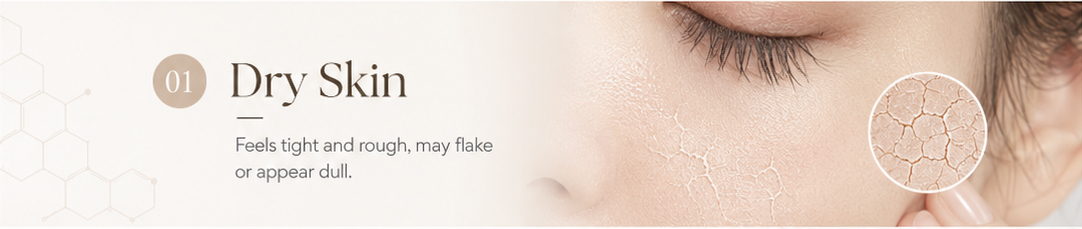
Dry skin produces less natural oil and may have difficulty retaining moisture. It often feels tight, rough, or uncomfortable, especially after cleansing.
Common signs include:
- Tightness after washing
- Rough or flaky texture
- Dull appearance
- Fine, less visible pores
- Dehydration lines
- Increased discomfort in cold or dry weather
Dry skin can generally be divided into two conditions.
Water-deficient skin lacks sufficient moisture and may feel tight despite normal oil production.
Oil-deficient skin produces less sebum, which can weaken the skin’s protective lipid layer and make moisture loss more noticeable.
Daily Care Priorities
Use gentle cleansing methods and avoid excessively hot water, prolonged cleansing, and frequent exfoliation.
Moisturizing care should focus on replenishing both water and lipids. Applying moisturizer shortly after cleansing can help reduce moisture loss.
Daily sun protection is also important, as ultraviolet exposure can contribute to dryness, uneven tone, and premature visible aging.
2. Oily Skin
Common Characteristics
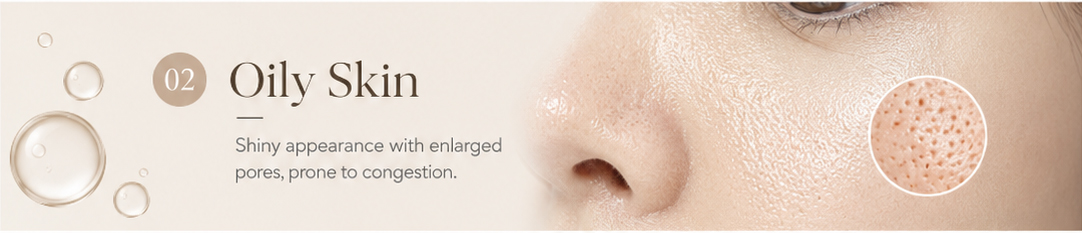
Oily skin produces more sebum and often develops visible shine, enlarged-looking pores, blackheads, or congestion.
Common signs include:
- Noticeable shine, especially across the forehead, nose, and chin
- Enlarged-looking pores
- Frequent blackheads or whiteheads
- Makeup that wears off quickly
- Recurring blemishes or congestion
- A thicker or less refined skin texture
Oil production does not mean the skin has enough water. Aggressive cleansing may temporarily remove surface oil but can leave the skin dehydrated and uncomfortable.
Daily Care Priorities
Choose mild cleansing and avoid repeatedly washing the face to achieve a completely oil-free feeling.
Oily skin still requires hydration. Lightweight hydration can help maintain comfort without adding a heavy or greasy finish.
Avoid squeezing blemishes or repeatedly touching congested areas, as this may increase irritation and the likelihood of post-blemish marks.
Consistent sun protection is important because ultraviolet exposure may worsen inflammation and make pigmentation more noticeable.
Persistent or severe acne should be evaluated by a qualified dermatologist rather than treated only as an oil-control issue.
3. Visible Skin Aging
Common Characteristics
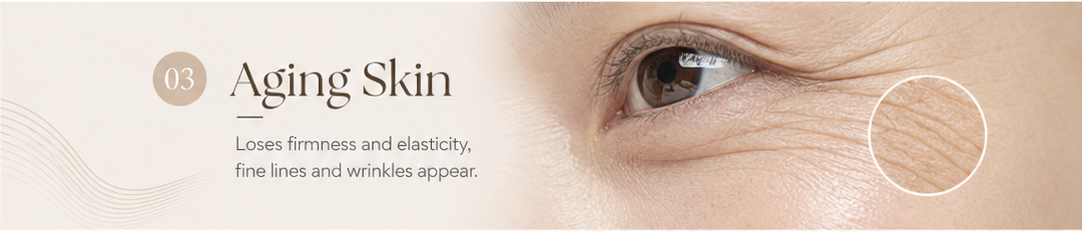
Visible skin aging develops gradually as collagen, elastin, lipids, and moisture levels change over time. Sun exposure, repetitive facial movement, lifestyle habits, and environmental stress can make these changes more noticeable.
Common signs include:
- Fine lines and wrinkles
- Loss of firmness
- Reduced elasticity
- Dryness or roughness
- Dull or uneven-looking tone
- Less defined facial contours
- Slower-looking recovery from dryness or irritation
Visible aging is not a separate basic skin type. Dry, oily, and sensitive skin can all show signs of aging.
Daily Care Priorities
The most important long-term step is consistent sun protection. Ultraviolet radiation is a major contributor to premature visible skin aging and uneven pigmentation.
Maintain regular hydration and avoid repeatedly irritating the skin through aggressive exfoliation or frequent changes in routine.
Balanced nutrition, adequate sleep, physical activity, and avoiding smoking can also support the overall appearance and condition of the skin.
Visible changes develop gradually, so consistent care is usually more valuable than intense short-term treatment.
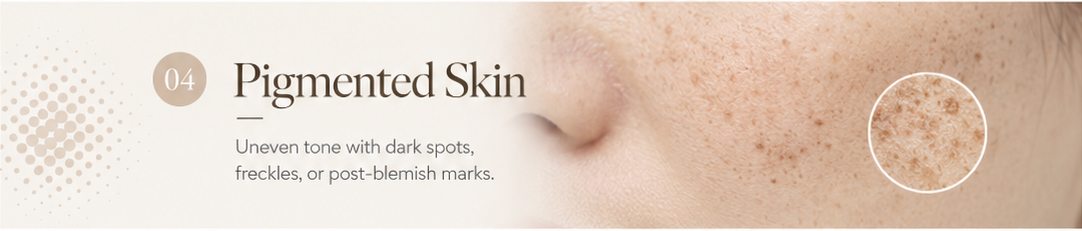
4. Pigmented Skin
Common Characteristics
Pigmentation occurs when melanin becomes concentrated or unevenly distributed in certain areas of the skin.
It may appear as:
- Freckles
- Sun spots
- Post-blemish marks
- Uneven-looking tone
- Dark patches
- Pigmentation following irritation or inflammation
Pigmentation can be influenced by sun exposure, hormones, inflammation, skin injury, aging, and individual genetic factors.
The term “pigmented skin” does not describe a single permanent skin type. It refers to a visible concern that can occur in any skin tone or skin type.
Daily Care Priorities
Daily sun protection is essential because ultraviolet and visible light exposure may deepen existing pigmentation and encourage new unevenness.
Avoid picking blemishes or repeatedly irritating darkened areas. Inflammation and friction can make post-inflammatory pigmentation more persistent.
Use gentle cleansing and maintain adequate hydration, as a stable skin barrier supports more consistent skin renewal.
Pigmentation that changes rapidly, develops irregular borders, bleeds, becomes raised, or looks significantly different from surrounding spots should be assessed by a healthcare professional.
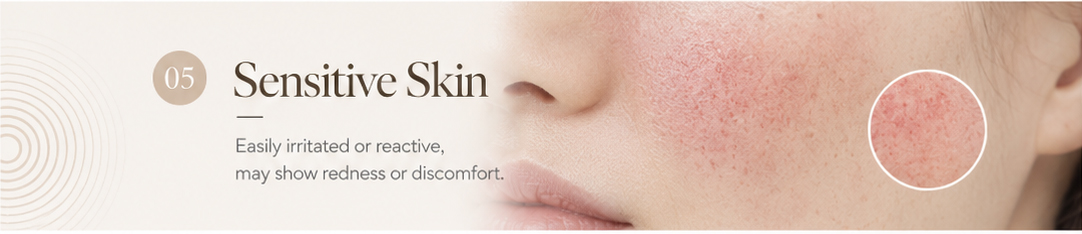
5. Sensitive Skin
Common Characteristics
Sensitive skin reacts more easily to environmental changes, friction, cleansing, cosmetics, or certain ingredients.
Common signs include:
- Redness
- Burning or stinging
- Itching
- Tightness
- Flaking
- Sudden discomfort after applying skincare
- Frequent reactions to temperature or weather changes
Sensitivity may be naturally occurring, but it may also develop when the skin barrier is disrupted by over-cleansing, excessive exfoliation, sun exposure, dryness, or unsuitable product combinations.
Daily Care Priorities
Keep the routine simple and introduce new products one at a time.
Avoid excessive exfoliation, harsh scrubbing, frequent peel-off treatments, and fragranced or highly stimulating formulas when the skin is reactive.
Patch testing can help identify potential reactions, although it cannot guarantee that irritation will never occur.
When the skin feels inflamed or uncomfortable, reduce unnecessary steps and prioritize gentle cleansing, moisture retention, and sun protection.
Persistent redness, swelling, pain, cracking, or recurring rashes may indicate a condition that requires professional assessment.
How to Assess Your Skin at Home
Cleanse the face gently and do not immediately apply skincare. Observe the skin after approximately 30–60 minutes in a comfortable indoor environment.
Consider the following questions:
- Does the entire face feel tight or rough?
- Is shine concentrated in the T-zone or visible across most of the face?
- Are there dry and oily areas at the same time?
- Does the skin sting or redden easily?
- Are dark marks, freckles, or uneven areas becoming more noticeable?
- Do fine lines appear mainly when the skin is dry, or are they consistently visible?
This simple observation can provide a general reference, but it is not a medical diagnosis.
Skin may also change with climate, stress, sleep, hormones, medication, age, and seasonal conditions. Reassessment is often necessary.
Can You Have More Than One Skin Condition?
Yes. Multiple skin concerns commonly occur together.
Examples include:
- Oily but dehydrated skin
- Dry and sensitive skin
- Aging skin with pigmentation
- Oily skin with post-blemish marks
- Sensitive skin with temporary dryness
When several concerns are present, address skin comfort and barrier stability first. Trying to correct every issue at once can increase irritation and make the skin more difficult to assess.
Essential Care Principles for Every Skin Condition
Regardless of skin type, a balanced routine usually begins with four basic principles:
Gentle Cleansing
Remove dirt, sunscreen, and excess oil without leaving the skin extremely tight or uncomfortable.
Adequate Moisture
Hydration is relevant to both dry and oily skin. The appropriate texture and amount may vary, but maintaining moisture supports skin comfort and barrier function.
Daily Sun Protection
Consistent sun protection helps reduce the effects of ultraviolet exposure, including dryness, uneven tone, pigmentation, and premature visible aging.
Consistency
Introduce changes gradually and observe the skin’s response. Frequent switching and excessive layering can make irritation more likely.
When to Seek Professional Advice
Consult a qualified dermatologist or healthcare professional when you notice:
- Persistent or painful redness
- Severe itching, burning, or swelling
- Cracked, bleeding, or infected-looking skin
- Sudden or widespread pigmentation
- Rapidly changing spots or moles
- Recurring eczema-like rashes
- Moderate to severe acne that leaves marks or scars
- Skin reactions that do not improve after stopping suspected triggers
Skincare can support the appearance and comfort of the skin, but it should not replace medical diagnosis or treatment.
Final Takeaway
Dryness, oiliness, sensitivity, pigmentation, and visible aging are not isolated labels. They frequently overlap and may change over time.
The most effective approach is to observe how the skin currently feels and behaves, maintain a gentle and consistent routine, and avoid treating temporary concerns with unnecessarily aggressive methods.
Understanding your skin is not about fitting it into one permanent category. It is about recognizing its changing needs and responding with appropriate care.